
Trust & Will Contests in Orange County & LA County
Top Ranked Trust & Probate Lawyers in California
☰ Quick Facts About This Page
- Deadlines can limit your options
- Sudden changes raise red flags
- Capacity evidence drives outcomes
- Undue influence is often alleged
- Caregiver gifts face strict rules
- Medical records can be critical
- Witness credibility matters greatly
- Court orders can protect assets
- Mediation may reduce legal costs
- Probate procedures can vary by county
Contesting a Will or Trust in California
A trust or will contest happens when family members challenge the legal validity of an estate planning document. These cases often happen when a family sees a late change that does not fit the person’s long term plan, or when someone new appears and receives most of the estate.
Oftentimes, a “bad actor” manipulates the person who possesses the will into signing a new document that disinherits the natural family and leaves the majority of the estate to the manipulator. In California, trust and will contests are handled in probate court and can have lasting financial and family consequences if not addressed carefully.
Many contests start quietly, with unanswered questions about who arranged the signing, who was present, and what the person understood at the time. Over time, those concerns can turn into a formal probate dispute that requires medical evidence, witness testimony, and clear documentation.
An experienced trust and probate litigation attorney from Max Alavi, Attorney at Law, APC, helps clients contest suspicious estate planning changes and defend valid documents in Orange County and Los Angeles County probate courts.
Our Trust Litigation Case Process

1. Case Evaluation
We begin with a full review of the trust, will, financial records, and family history. Our legal team will identify your rights, deadlines, and the best legal path before anything is filed.

2. Court Filings
The case formally begins when a probate petition or trust lawsuit is filed in California probate court, often in Orange County Superior Court. This step sets the legal issues, brings all parties into the case.

3. Discovery and Settlement
Both sides exchange documents, take depositions, and file motions to address disputes. Many trust and probate cases resolve here through settlement discussions or court ordered mediation.

4. Trial and Resolution
If no agreement is reached, the case proceeds to trial before a probate judge. After a ruling, the court orders distributions, removals of fiduciaries, or financial recovery, and we handle enforcement or appeals if needed.
Begin Your Free Case Evaluation Now
Call to schedule a free and confidential consultation with a trust litigation lawyer.

Types of Trust and Will Contest Cases We Handle
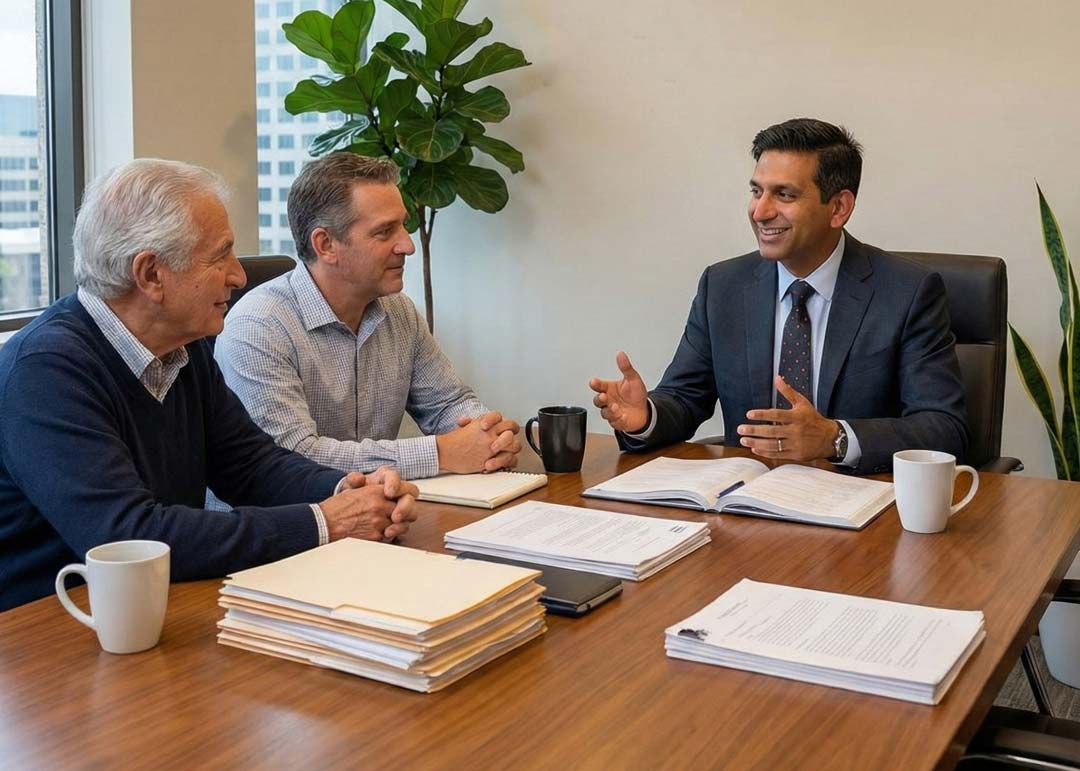
Trust and will contests can take many forms. Our law firm and legal staff regularly represents clients in matters involving concerns like:
- A will or trust amendment signed during a person’s severe decline in health
- Sudden disinheritance of children or longtime beneficiaries
- A caregiver, new partner, or advisor receiving major gifts
- Isolation of the person who made the plan
- Claims the person lacked capacity to sign
- Claims of undue influence, fraud, or duress
- Disputes about whether the document was properly signed
- Questions about authenticity, including signature disputes
- Fights over who controls the estate or trust during the case
When the dispute is about whether a person had the ability to make a will, Probate Code section 6100.5 addresses testamentary capacity. It focuses on whether the person understood the act they were doing, understood the nature of their property, and could recognize the people who would normally be part of their plan. When the dispute is about undue influence, the case often turns on dependence, isolation, and who benefited. California courts look closely at the surrounding facts and whether the result is unfair given the person’s history.
Top FAQs About Contesting a Will or Trust
When should I speak with a trust and probate litigation attorney?
If you see a sudden change, suspect undue influence, or have concerns about capacity, it is smart to speak with counsel early. Waiting can reduce access to records and witnesses, and deadlines can limit remedies.
How long do I have to contest a will in California?
It depends on the procedural posture of the case. If the will has been admitted to probate, Probate Code section 8270 sets a limited window for certain petitions to revoke probate, commonly 120 days after admission.
What are the most common grounds to contest a will?
Common grounds include lack of capacity under Probate Code section 6100.5, undue influence, fraud, duress, mistake, and disputes about execution or revocation. Probate Code section 8252 addresses burdens of proof in a will contest trial.
Can I contest a trust amendment?
Yes. Many disputes are brought through a trust petition under Probate Code section 17200. These cases often focus on whether the person had capacity, whether they were pressured, and whether the document is authentic.
Are caregiver gifts treated differently in California?
They can be. Probate Code section 21380 creates a presumption that can invalidate certain transfers to disqualified persons in specified situations. The facts and exceptions matter, so the timeline and document history are important.
Do trust and will contests always go to trial?
No. Many cases resolve after the key evidence is gathered, including medical records, drafting files, and witness testimony. The goal is building a case that is ready for a contested hearing while still positioning you for a practical resolution when it makes sense.

Deadlines and Procedures When Contesting a Will or Trust
Timing matters in will contests. In many cases, a will is submitted to the court and admitted early in the probate process. If a will has already been admitted, California Probate Code section 8270 allows certain interested persons to file a petition to revoke probate of the will within a limited time window, often 120 days after the will is admitted.
In practical terms, delay can hurt your case even before a deadline runs. Medical providers purge records, witnesses move, and the facts get harder to prove. Early action is often about protecting evidence as much as it is about filing paperwork.
Will contests also come down to proof rules. Probate Code section 8252 addresses burdens of proof in a will contest trial, including that the party offering the will generally proves due execution, and the contestant generally proves claims like lack of capacity, undue influence, fraud, duress, mistake, or revocation.
Trust Contests and Suspicious Amendments
Trust contests often focus on amendments or restatements signed late in life. Many Orange County and Los Angeles County families use living trusts, so the dispute is not always about a will. It is often about whether a disputed trust change should be enforced.
Many trust disputes are brought through a petition under Probate Code section 17200, which allows the court to address a wide range of issues involving the internal affairs of a trust. In a contest setting, that can include disputes about the validity of a trust document, the meaning of a trust term, or whether a challenged change should be treated as effective.
California law has strict rules to prevent individuals from manipulating an estate plan for their own benefit. Under California Probate Code section 21380, the court may assume a gift is legally invalid if it goes to a paid caregiver or the person who drafted the document. This situation frequently occurs when a vulnerable elder suddenly leaves a massive financial gift to a new caregiver, which forces the caregiver to prove they did not use extreme pressure or deceit to get the money.
A common example in Southern California is a late trust restatement signed during hospitalization, with a beneficiary arranging the meeting, controlling access, and later producing a document that changes everything. The legal issue is whether the evidence supports capacity problems, undue influence, or a disqualifying transfer.
Common Issues and Solutions in Trust and Will Contests
Trust and will contests require more than legal arguments. They require courtroom strategy, strong evidence, and a clear plan for how to present the facts to a probate judge.
The probate court in your county can issue orders that protect the estate or trust while the contest is pending. Many disputes can initiate immediate steps such as stopping a transfer, forcing disclosure of documents, and getting a clear schedule for the case.
Common Issues in Trust and Will Contests |
Possible Remedies in Probate Court |
| Late stage changes, family suspects manipulation | Contest procedures, evidentiary hearing, validity ruling |
| Capacity concerns, dementia, medication, hospitalization | Medical record orders, witness testimony, court findings |
| Undue influence allegations, isolation, dependency, pressure | Discovery process, protective orders, set aside relief if proven |
| Caregiver or drafter receives major gift | Presumption litigation under Probate Code section 21380, gift invalidation where proven |
| Disputed execution, missing witnesses, signature concerns | Proof of execution hearing, handwriting and witness evidence |
| Trust amendment authenticity disputed | Trust petition under Probate Code section 17200, court instructions and orders |
| Fiduciary conflict, executor or trustee accused of bias | Court supervision, suspension, removal requests where justified |
| Asset transfers during a pending contest | Restraining orders, turnover orders, protective relief |
| Settlement disputes, family cannot agree on value | Mediation, structured settlement terms, court approved compromise |
How Attorney Max Alavi Helps With Contesting a Will or Trust
Contesting a will or trust requires more than technical legal knowledge. It demands courtroom experience, strategic judgment, and a clear understanding of how California probate judges evaluate credibility, medical evidence, and family conflict. You need a trust litigator who knows how to depose hostile witnesses, analyze complex medical records, and present a compelling case to a probate judge. Attorney Max Alavi has decades of experience handling contested trust and estate disputes throughout California. The firm represents clients in high conflict matters involving significant assets, family owned businesses, and long standing family conflict.
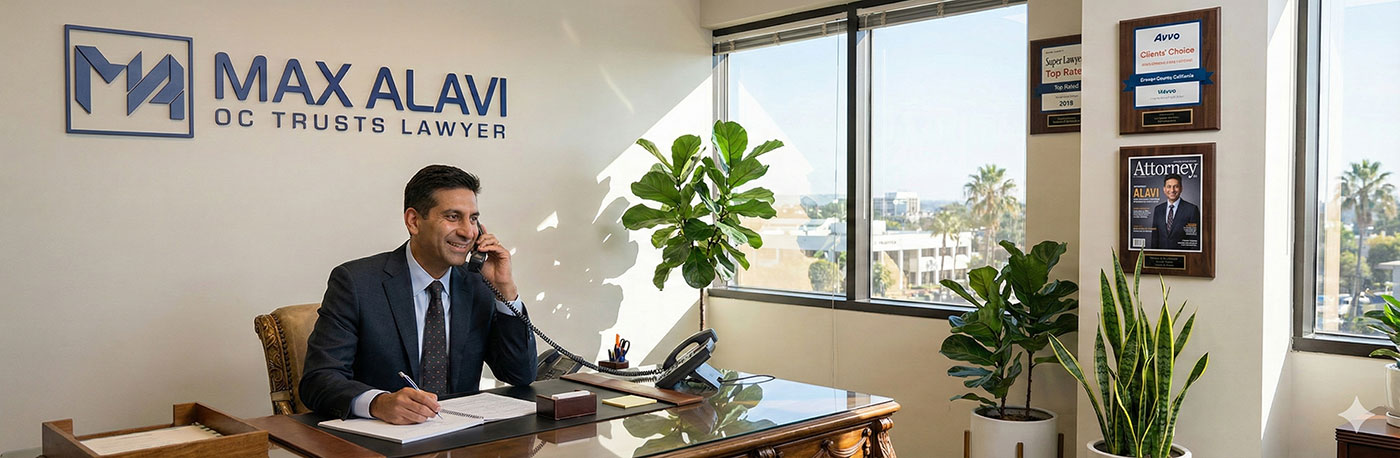
Honored with the AVVO Client’s Choice Award, recognized as a Super Lawyer, and millions recovered in trust and probate litigation, Max Alavi brings a wide range of courtroom experience to every dispute. Our firm has a proven track record of defeating bad actors and defending valid plans put in place. In one notable case, we successfully represented a beneficiary in a heavily contested trust administration, securing a favorable settlement that protected their rightful inheritance in a 6 million dollar estate.
Whether the goal is to set aside a suspicious document, defend a valid estate plan, or secure protective court orders while a case is pending, our firm approaches each matter with a focus on protecting client rights and achieving the best results.
Trust & Will Contest
Areas We Serve
At Max Alavi, Attorney at Law, we have decades of experience in dealing with complex trust litigation matters throughout California. When you hire our legal team, you are bringing on the best and toughest litigators around to aggresively fight on your behalf.
Trust & Will Content
Areas We Serve
At Max Alavi, Attorney at Law, we have decades of experience in dealing with complex trust litigation matters throughout California. When you hire our legal team, you are bringing on the best and toughest litigators around to aggresively fight on your behalf.
What Our Amazing Clients Have To Say



Why Clients Choose Max Alavi, APC
- Super Lawyers recognition based on peer review
- Extensive experience in California probate law
- Millions recovered in trust and probate litigation
- Strategic handling of trust and estate disputes
- Proven advocacy for surviving spouses and heirs
- Clear guidance through complex probate matters
- Outstanding dedication to every one of our clients


Let's Work Together - Tell Us Your Needs
At Max Alavi, Attorney at Law, APC, we understand the complexities of California probate law and are committed to providing solutions for trust and estate disputes. Contact us today to speak with one of our legal staff.